The ancient game of Go, often referred to as Go Weiqi, is not merely a pastime; it is a profound journey of strategy, patience, and mental discipline. As the world’s oldest board game still played in its original form, Go has evolved into a premier Mind Sport Go that challenges even the most advanced artificial intelligence. Whether you are a beginner picking up your first set of stones or an enthusiast looking to sharpen your tactical edge, understanding the balance between territory and influence is key to mastering the board.
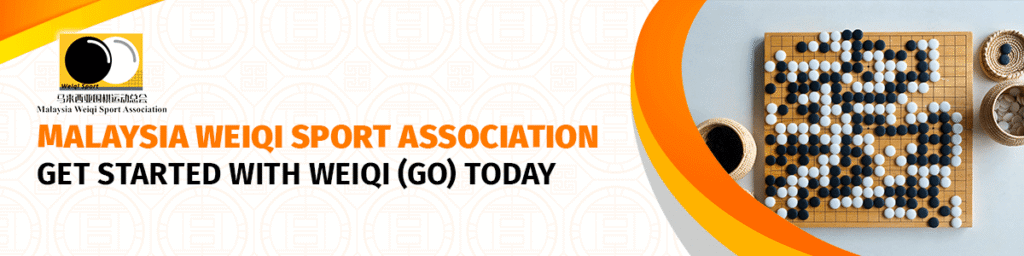
In Malaysia, the growth of this intellectual pursuit is spearheaded by the Persatuan Sukan Weiqi Malaysia (Malaysia Weiqi Association). This body serves as the cornerstone for the local community, fostering talent and organising national-level tournaments that put Malaysian players on the global map.
The Fundamentals: How to Play Go
At its core, Go is a game of surrounding territory. It is played on a grid—typically 19×19 for standard games, though beginners often start on 9×9 or 13×13 boards to grasp the mechanics quickly.
1. The Objective
The goal is simple: control more territory than your opponent. Territory is defined as the vacant intersections surrounded by your stones. While capturing stones is a part of the game, it is secondary to the ultimate goal of territorial dominance.
2. Placing Stones
Players take turns placing one stone at a time on the intersections (not the squares). Black always moves first. Once a stone is placed, it cannot be moved to another spot, though it can be removed if it is captured.
3. Liberties and Capture
Every stone or group of stones has “liberties”—the empty adjacent intersections connected by the grid lines.
- Capture: If a stone or group is completely surrounded by the opponent’s stones, leaving it with zero liberties, it is captured and removed from the board as a “prisoner.”
- Suicide Rule: You cannot place a stone in a position where it would immediately have no liberties, unless that move captures an opponent’s stone.
The Concept of “Life and Death”
A group of stones is considered “alive” if it can never be captured, even if surrounded. This usually requires the group to have at least two “eyes”—separate internal spaces that the opponent cannot occupy simultaneously.
Essential Go Tactics and Strategies
To move from a beginner to an intermediate player, one must master specific tactical concepts. These are often divided into the opening (Fuseki), the mid-game, and the endgame.
Opening Theory (Fuseki)
The first 20 to 50 moves of a game are crucial for setting the “framework” or moyo. A golden rule in Go Weiqi is: Corner, Side, then Center.
- Corners: Easiest to secure because the edges of the board act as natural boundaries.
- Sides: The next priority for expanding influence.
- Center: The most difficult area to surround, usually used for influence rather than pure territory.
Tactical Manuevers
| Tactic | Description | Strategic Goal |
| Joseki | Established sequences of play in the corners. | Ensures a balanced result for both players locally. |
| Tsumego | Life-and-death puzzles. | Sharpens “reading” ability to see several moves ahead. |
| Hane | A move that “bends” around an opponent’s stone. | Used to block progress or increase pressure. |
| Cutting | Separating opponent stones into two weak groups. | Creates attacking opportunities and reduces their liberties. |
Advanced Concepts: Sente and Gote
- Sente: A move that requires a response. Having “sente” means you have the initiative and are dictating the flow of the game.
- Gote: A move that does not require an immediate response, often ending the sequence of play in that area and handing the initiative back to the opponent.
The Global and Local Rise of Go
The popularity of Go has seen a massive surge in the last decade, particularly after the historic match between AlphaGo and Lee Sedol in 2016. According to the International Go Federation (IGF), it is estimated that over 40 million people worldwide know how to play Go, with a significant concentration in East Asia [Source: International Go Federation].
In the local context, Persatuan Sukan Weiqi Malaysia has reported a steady increase in youth participation. Recent statistics from national grading examinations show a 25% year-on-year growth in registered student players since 2022. This surge is attributed to the recognition of Go as a formal Mind Sport Go in schools and its inclusion in regional sporting events like the Southeast Asian (SEA) Games.
Why Pursue Go Weiqi?
Beyond the thrill of competition, playing Go offers significant cognitive benefits. A 2025 study published in the Journal of Cognitive Enhancement found that regular Go players showed a 15% improvement in executive function and spatial reasoning compared to non-players [Source: PMC – NIH Research on Go and the Brain]. It is a holistic workout for the brain, teaching discipline, risk management, and the “Art of War” on a wooden board.
Conclusion: Your Journey Starts Here
Mastering Go Weiqi is a lifelong endeavour that offers endless intellectual rewards. Whether you are looking for a competitive edge or a meditative hobby, the Malaysian Go community is ready to welcome you. By learning the basic tactics and engaging with the local ecosystem, you join a tradition that spans millennia.
If you are looking to take your first steps, find a local club, or join a national-level certification program, Persatuan Sukan Weiqi Malaysia (MWSA) is the definitive resource. They provide the infrastructure and coaching necessary to transform a casual interest into a deep-seated passion for the game.
Ready to challenge your mind and meet fellow enthusiasts? Visit Malaysia Weiqi Sport Association today! To get involved with local events, inquire about classes, or find your nearest playing hub, don’t hesitate to reach out!
Connect with Persatuan Sukan Weiqi Malaysia today to start your journey!