When people talk about mind sports, Chess is usually the first game that comes to mind. It is famous, respected, and often linked with intelligence and strategy. But among serious board game players, there is another game that is often described as even deeper and more demanding. That game is Go.
At first glance, Go looks almost too simple to be compared with Chess. No different pieces, no special moves, just black and white stones placed on a board. Yet those who have played both games often say the same thing. Chess challenges your calculation, but Go challenges your entire way of thinking. That is why Go is often called the ultimate mind sport.
Understanding the Two Games
What is Go?
- Go, also called Weiqi Go, is one of the oldest board games in the world, originating in ancient China more than 2,500 years ago. The rules are simple. Players take turns placing stones on a grid, aiming to control more territory than their opponent. Once a stone is placed, it usually stays there until it is captured. There is no fixed goal like checkmate. Instead, the game slowly unfolds across the entire board. Every move feels small, but over time, those small decisions shape the whole game.
What is Chess?
- Chess has a very different feel. Each piece moves differently and has a specific role. The objective is clear from the start: checkmate the opponent’s king. The board is smaller, the conflicts are direct, and the consequences of mistakes are often immediate. Chess rewards sharp calculation, strong memory, and the ability to see several moves ahead. Many positions have clear best moves, especially at higher levels of play.
Simplicity of Rules vs Complexity of Possibilities
One of the most interesting differences between mind sport Go and Chess is how simple Go is to learn, yet how difficult it is to truly understand.
Go’s rules can be explained in minutes. Place stones, surround territory, avoid losing your groups. That is it. But once the game starts, the number of possible positions explodes. The board is huge, and every stone affects the value of stones placed far away.
Chess, on the other hand, has more rules and piece movements to remember. However, the smaller board and defined interactions limit the overall possibilities. This is one reason why computers mastered Chess much earlier than Go.
In Go, simplicity does not mean easy. It means freedom, and freedom creates complexity.
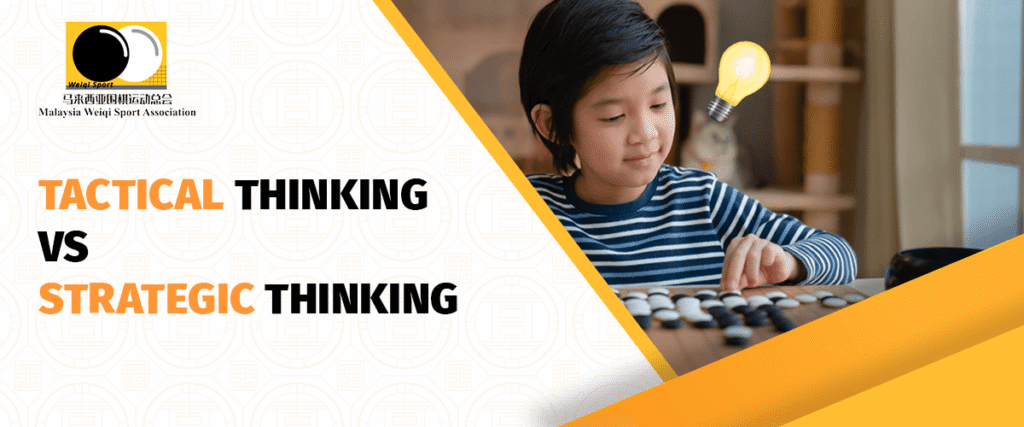
Tactical Thinking vs Strategic Thinking
Tactical Thinking in Chess
- Chess is heavily tactical. Players calculate variations, spot threats, and look for precise sequences that lead to material gain or checkmate. Many games are decided by one overlooked move or one failed calculation.
Preparation also plays a big role. Openings, patterns, and known positions give experienced players a strong advantage. Accuracy matters, and small mistakes are often punished immediately.
Strategic Thinking in Go
- Go is more strategic than tactical. While reading ahead is important, there is rarely a single correct move. Instead, players are constantly judging balance. Where to attack, where to defend, and where to give up something small for a bigger advantage later.
In Go, losing a local battle does not always mean losing the game. Sometimes it is the right decision. This forces players to think long-term and accept trade-offs, something that closely mirrors real-life decision-making. This is also why Weiqi is great for students.
Which Game Is Harder to Master?
Chess is easier to measure. Skill levels are clear, progress can be tracked, and improvement often feels faster in the early stages. With enough study, players can quickly see results.
Go is different. Beginners often feel lost because there are no obvious guideposts. Improvement feels slow, and understanding comes in waves rather than steps. Many strong players say they are still learning after decades of playing. This is why Go is often described as a lifelong journey rather than a game you can fully conquer.
Conclusion
Chess and Go are both remarkable mind sports, each offering its own kind of challenge and beauty. Chess sharpens calculation and rewards precision. Go develops strategic vision, emotional balance, and long-term thinking.
What sets Go apart is not just its difficulty, but the way it challenges the player as a whole. There are no clear answers, no fixed paths, and no shortcuts to mastery. Every game is a reflection of judgment, patience, and understanding. That is why many players believe Go is not just a game, but the ultimate test of the human mind.
Discover the Power of Your Mind: Start Playing Go Today!
Curious to experience this depth for yourself? Try a game of Go and discover how it challenges your thinking in ways Chess never does.